SurfIO research note
How to appear in AI search: a primary-source page review
Appearing in AI search is not a controllable promise. This primary-source review turns it into a page-quality sequence a publisher can test, explain, and repeat.
Research object
- Question
- Which reader-visible page checks can be derived from four named primary documents about AI search and search appearance?
- Method
- Reviewed four named primary documents and organized their guidance into a sequence a publisher can inspect before and after release.
- Population and denominator
- Four named primary platform documents · 4 documents
- Limitations
- The sequence improves auditability; it does not guarantee inclusion in any AI answer.
Answer the reader first
A page cannot make itself appear in an AI answer on command. The useful work starts earlier: answer a specific reader question with information that holds up when opened outside a search result. Google’s AI-features guidance is relevant because it points publishers back to search fundamentals rather than a separate set of secret AI-only tactics. That means the article should establish the question, give the answer, and explain the limits before it tries to persuade.
For a B2B page, a direct answer might define the service scope, the inputs reviewed, and the decision a buyer can make from the output. That is more useful than a general claim about ‘AI visibility’. If the page cannot say what it does in terms a reader can verify, adding more keywords or metadata does not solve the editorial problem.
Evidence: Google Search Central AI features guide, Microsoft AI search guidance
Make the proof visible
A credible answer exposes the basis for its material claims. Google’s helpful-content guidance gives the editor a clear question: does the page demonstrate who created the information and why they are qualified to explain it? The reader should not have to infer this from branding. A named author, a short relevant background, and links to the sources that inform the recommendation make the claim easier to challenge or trust.
Visible proof also prevents a familiar sales-page failure. A page can mention a framework, but if it does not show the steps, examples, or conditions, the framework is just a label. This article uses a source comparison, a screenshot of the primary guidance, and a worked release example so that the recommendation does not depend on an invisible process.
Evidence: Google helpful content guidance, Microsoft AI search guidance
Check the released page, not only the draft
Google’s structured-data guidance makes an important boundary explicit: markup should describe what is on the page. The release check must therefore happen in the rendered product. Read the mobile page, open the source links, and inspect the table as a visitor sees it. If a source is clipped, an image has no useful alternative text, or a table requires a desktop-width screen to understand, the evidence is not actually available to the reader.
This is also where teams catch mismatches between a confident schema claim and cautious body copy. The correction is to bring the two layers back into agreement. Sometimes that means adding the missing visible explanation. Sometimes it means removing metadata that implies more than the page can demonstrate. Either result is better than hiding the discrepancy behind implementation detail.
Evidence: Google structured data guidance
Keep outcome claims bounded
The final step is to state what the review did and did not test. The sequence here checks answer quality, source visibility, visible-fact alignment, and the rendered experience. It does not sample AI answers, measure ranking changes, or calculate the chance that a named system will mention the page. Keeping that boundary in the article is useful for a buyer because it separates an observable editorial process from an unobservable future outcome.
A team can repeat this sequence across pages and use the result to prioritise repair. A page with a missing source or invisible evidence is held until fixed. A page that passes the sequence can be published with an honest note that performance remains uncertain. This is a stronger operating model than promising inclusion and silently changing the criteria after release.
Evidence: Google Search Central AI features guide, Google helpful content guidance
Source comparison
| Review step | Reader-visible proof | Release decision |
|---|---|---|
| Answer the query | A direct, useful answer is present | Hold a page that starts with slogans instead of an answer |
| Name sources | Original work and authorship are clear | Link the document or observation behind the claim |
| Match visible facts | Structured data describes on-page information | Remove metadata that the article cannot support |
| Check after release | Readers can access and use the page | Fix clipped tables or missing mobile evidence before indexation |
Units: Review steps. Denominator: 4 reviewed steps. Exclusions: The table does not report search performance.
Visual explanation
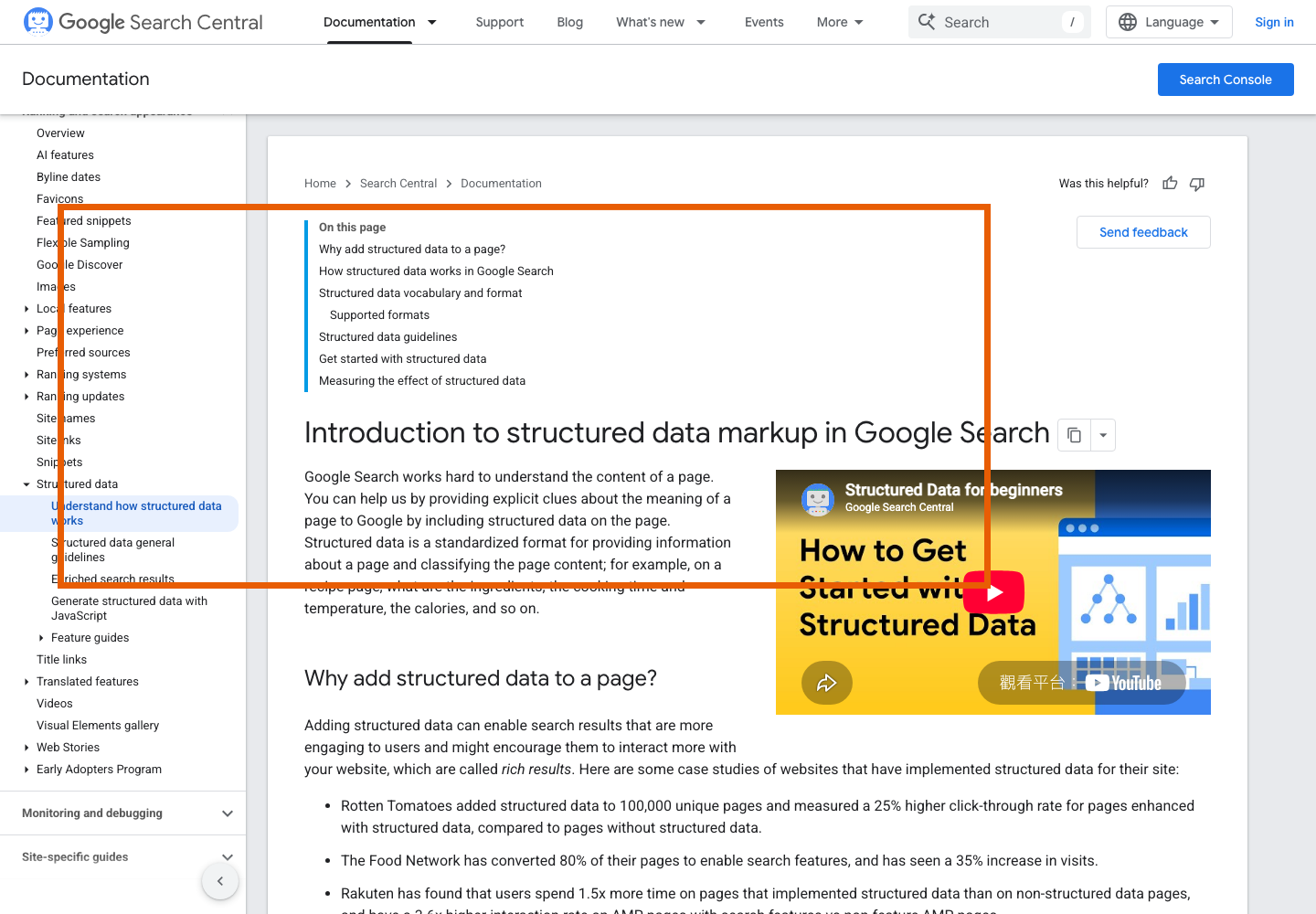
Source: Google structured data guidance, public documentation capture used for commentary and source identification. · 2026-07-26

Source: SurfIO process diagram from the article’s source review. · 2026-07-26
Concrete example
A SaaS company publishes a comparison page that says its product is ‘best for AI search’ but offers no definition, author, or sourceable proof.
- Replace the superlative with a direct explanation of the product capability and the conditions under which it applies.
- Add the responsible author, link the primary documentation or first-party evidence behind the capability, and show the comparison criteria in a mobile-safe table.
- After deployment, compare the visible copy with the page metadata and hold the page if the two make different claims.
Decision: Release only when all four page-review steps are visible in the rendered page; otherwise retain noindex while the evidence is repaired.
Limitation: A completed review describes page quality. It cannot establish that any AI search product will include the page.
Worked calculation
completed page-review steps / defined steps = review completion
- Completed page-review steps: 4 steps
- Defined page-review steps: 4 steps
4 / 4 = 100% review completion
All steps in this defined review were completed; no inclusion or ranking claim follows.
Methodology
SurfIO reviewed four linked primary documents on 26 July 2026 and transformed their reader-visible guidance into a four-step page review.
Limitations: This is a document-review method. It has no AI-answer sampling or performance measurement.
Editorial review
Reviewed by Codex visual QA on 2026-07-26. Executor review of local rendered desktop and 390x844 mobile screenshots, source-to-claim references, screenshot attribution, and concrete example. Human editorial approval is not represented by this record.
Passed: explanation depth, evidence integration, concrete example, visual usefulness, mobile review, desktop review.
Sources
- Google Search Central AI features guide · accessed 2026-07-26
- Google helpful content guidance · accessed 2026-07-26
- Google structured data guidance · accessed 2026-07-26
- Microsoft AI search guidance · accessed 2026-07-26
Acesley Chan
SurfIO Founder and AEO Strategy Director
7+ years in digital marketing; HKSTP Ideation Programme
Author background